
EOSVOLT logo EOSVOLT logo
en English
  • English
  • Dansk
  • Polski
  • 简体中文
  • ภาษาไทย
  • Malay
Fleet assets

Connect drivers, vehicles,
and charging activity.

EOSVOLT connects charge keys, drivers, and vehicles into one fleet structure.

Charging activity is recorded through charge keys. Once a charge key is linked to a driver, vehicle, or both, every session becomes easier to track, report, and understand across the fleet.

How fleet assets work together

The foundation of fleet charging

Fleet charging starts with three core assets: charge keys, vehicles, and drivers. Together, they create the structure needed to connect every charging session to the right part of your operation.
Charge keys

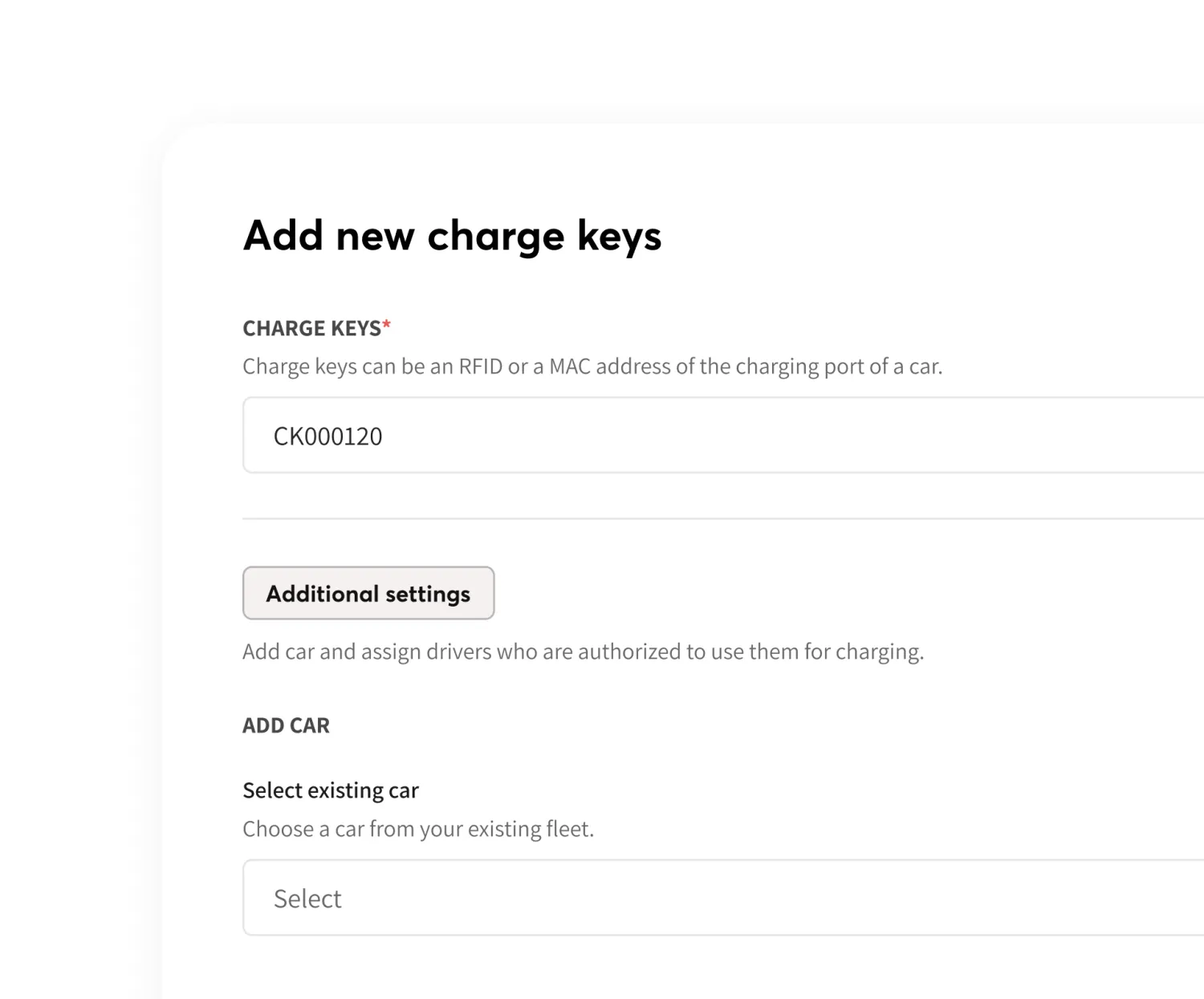
Charge keys are the credentials used to start charging sessions. They can be physical RFID cards, virtual access codes, or vehicle identifiers such as MAC addresses.

Every charging session is recorded against the charge key, making it the link between charging activity and your fleet assets.

Vehicles

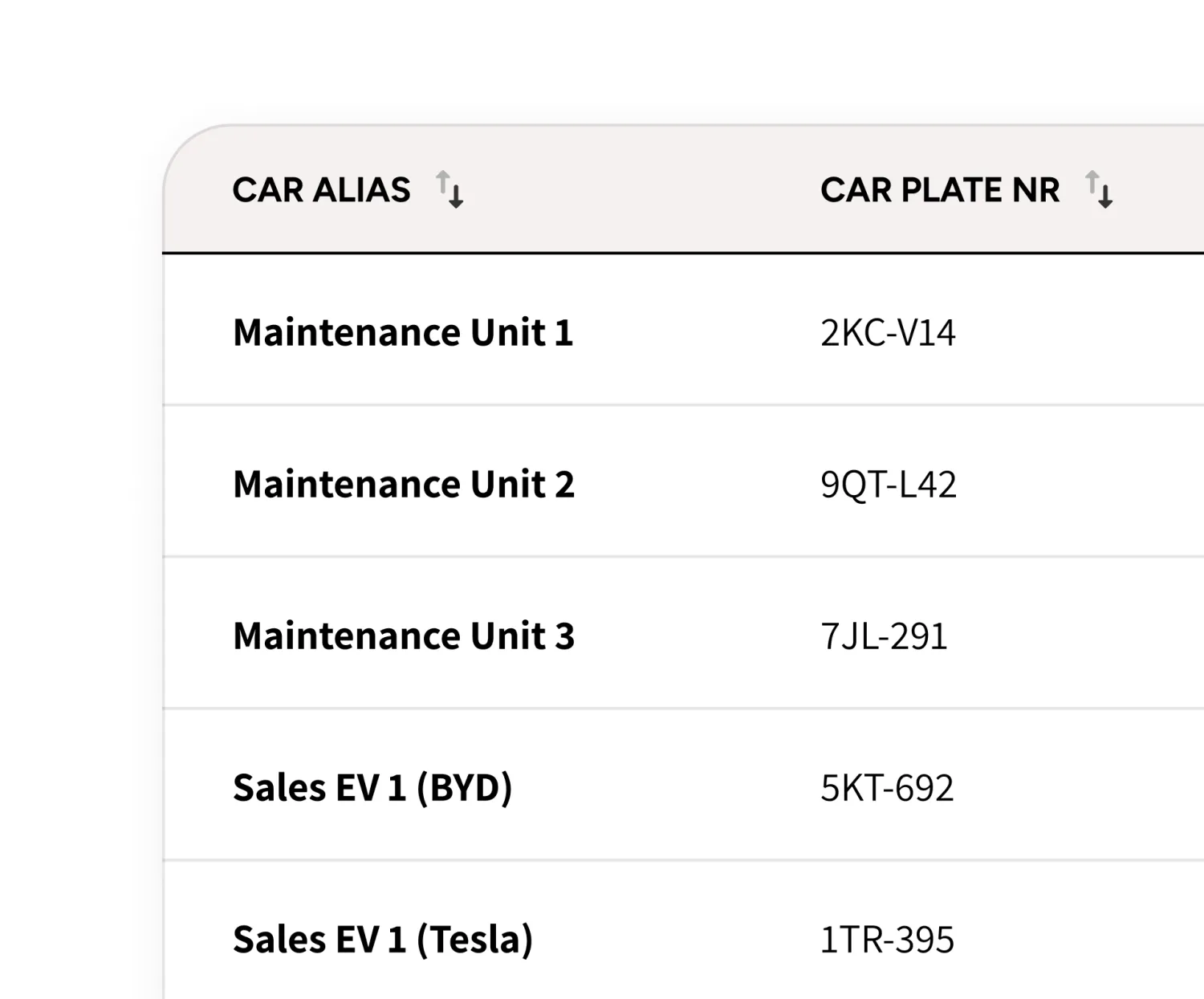
Vehicles represent the EVs being charged. By linking charge keys to vehicles, operators can track charging activity, energy use, and costs at vehicle level.

Drivers

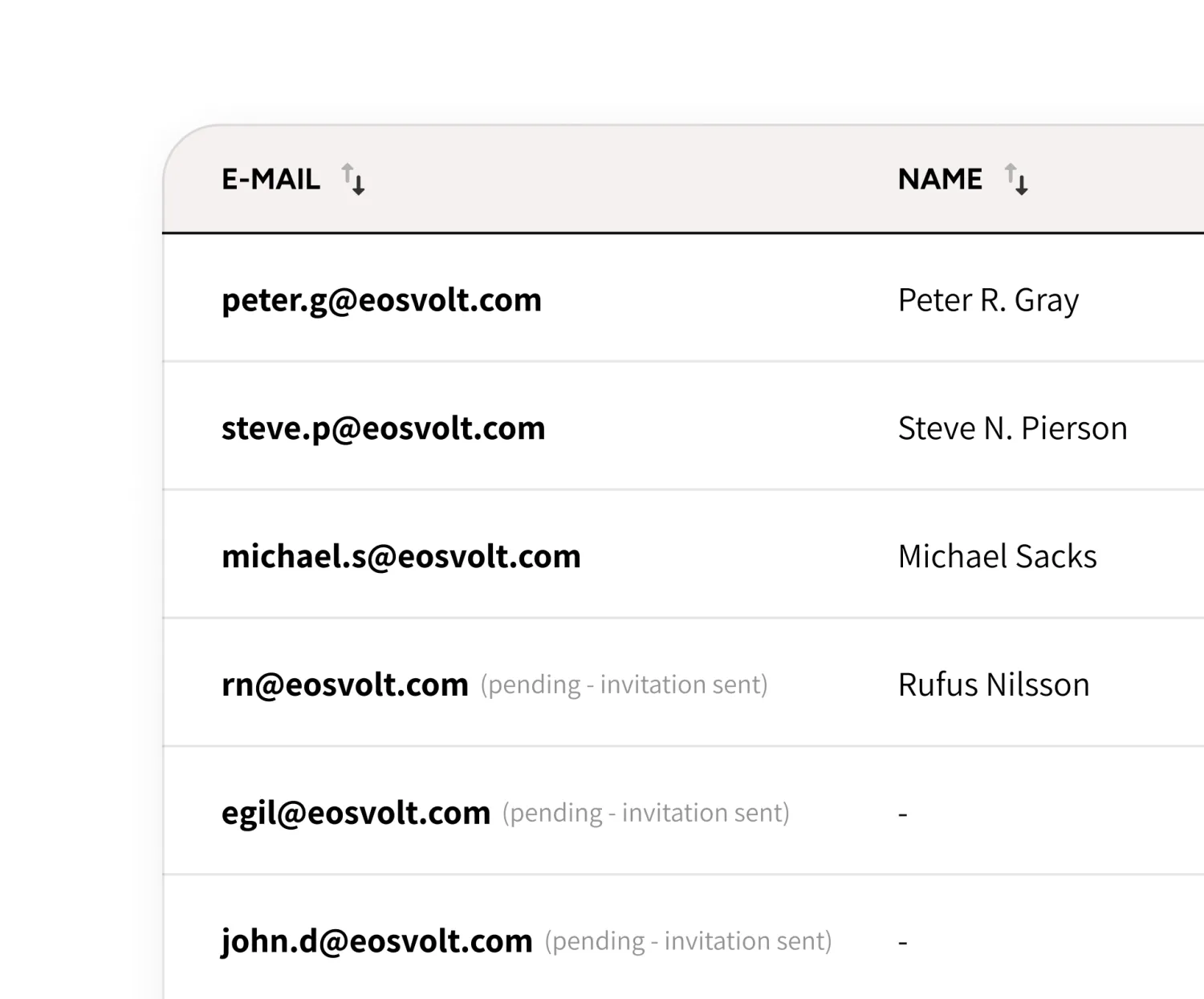
Drivers represent the people using charging services. By linking charge keys to drivers, operators can track individual charging activity, usage patterns, and costs.

Associate charge keys with the assets
that matter to your operation.

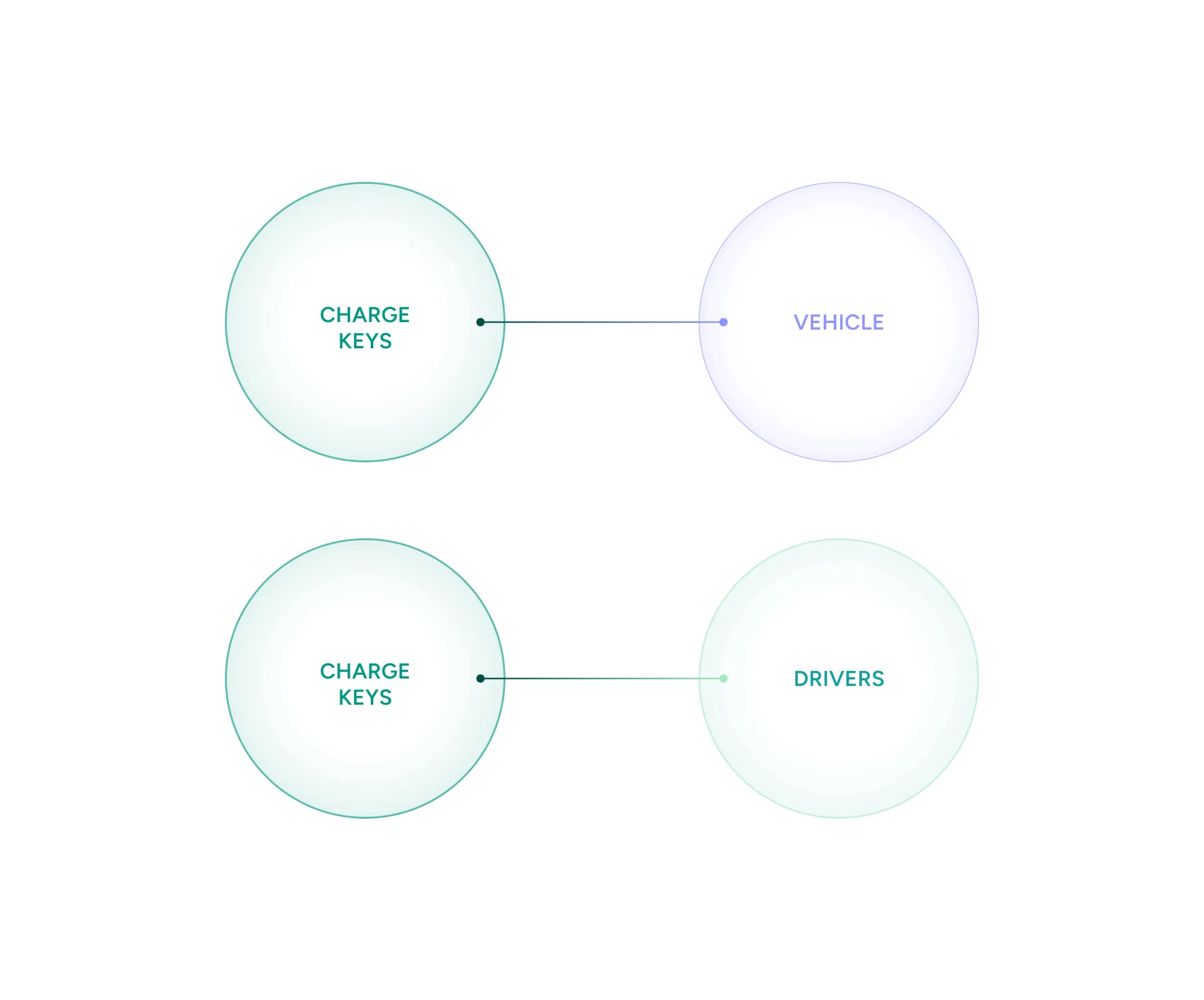
Charge keys can be linked to drivers, vehicles, or both, depending on how your fleet is managed and reported.
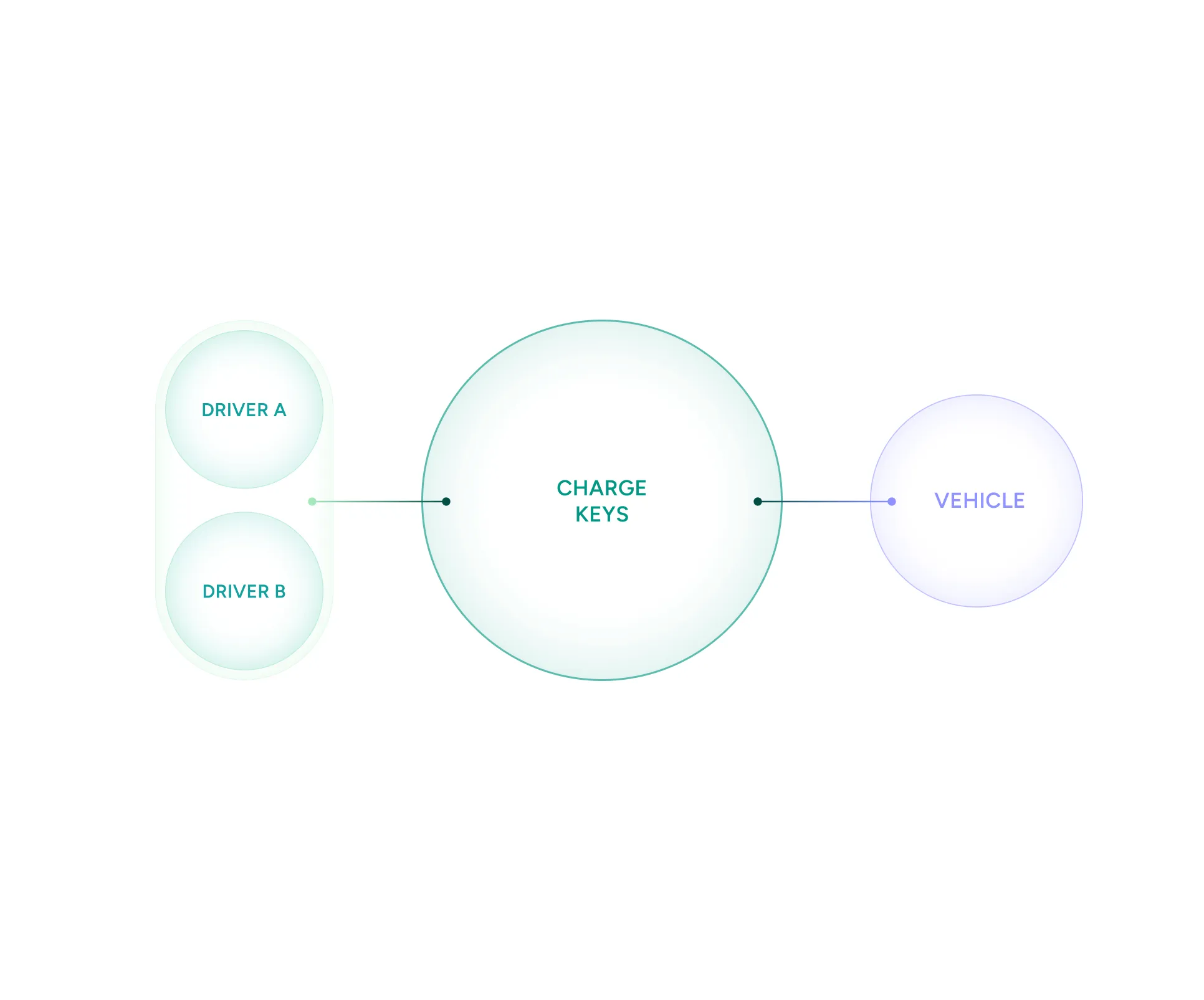
Single asset tracking

Track charging from one perspective

Link a charge key to either a vehicle or a driver, depending on how you want usage to be reported.

For example, if a charge key is linked to a vehicle, all sessions started with that key are recorded on the vehicle. This makes it easy to track energy use, costs, and charging history at vehicle level.

Multi asset tracking

Track charging across drivers and vehicles

Link a charge key to both a vehicle and a driver to connect each session to more than one part of your fleet operation.

This gives operators a clearer view of how charging is used across the fleet, making it easier to understand vehicle utilization, driver activity, and charging costs in the same reporting structure.