

Manage residential charging
across shared properties.
Give residents a convenient way to charge at home, while managing access, billing, and available power across apartment buildings, housing associations, and shared parking facilities.

Solution designed for charging in
residential property.
Residential properties have different charging needs. Some residents have their own parking space and charger, while others use shared facilities alongside visitors.
EOSVOLT helps operators manage these setups with clear access rules, individual billing, and tools to monitor and support charging across every property.
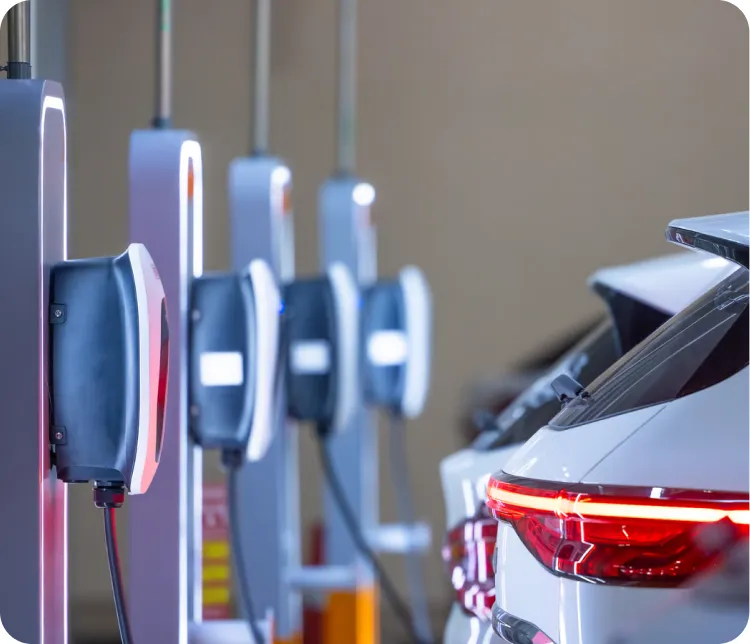
Dedicated residential parking
Give residents access to a charging plug assigned to their parking space. Manage plug ownership, charging prices, and billing individually, and update access when residents move.

Shared residential charging
Provide shared chargers for residents, with access restricted to approved users and charging prices configured for the building.
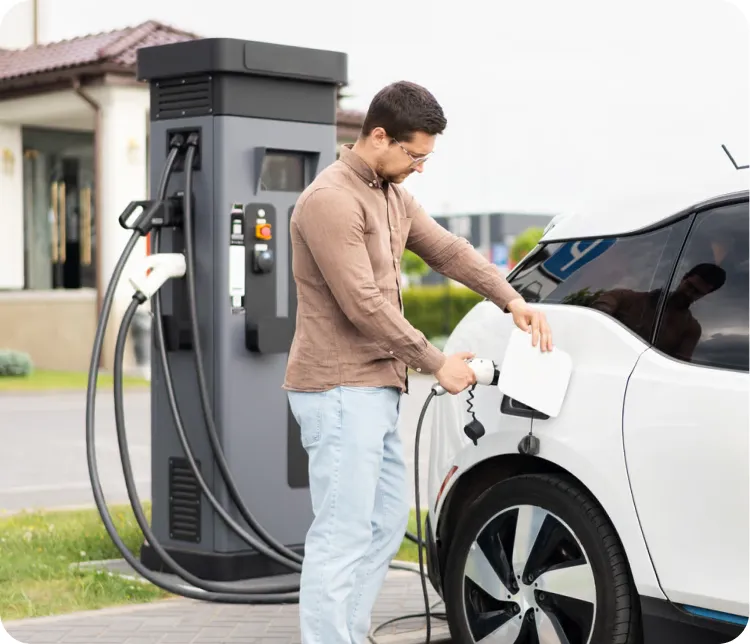
Residential and visitor parking
Support private parking spaces, shared residential chargers, and public visitor charging within the same property, with separate access and pricing settings.
Manage the details behind
residential charging.
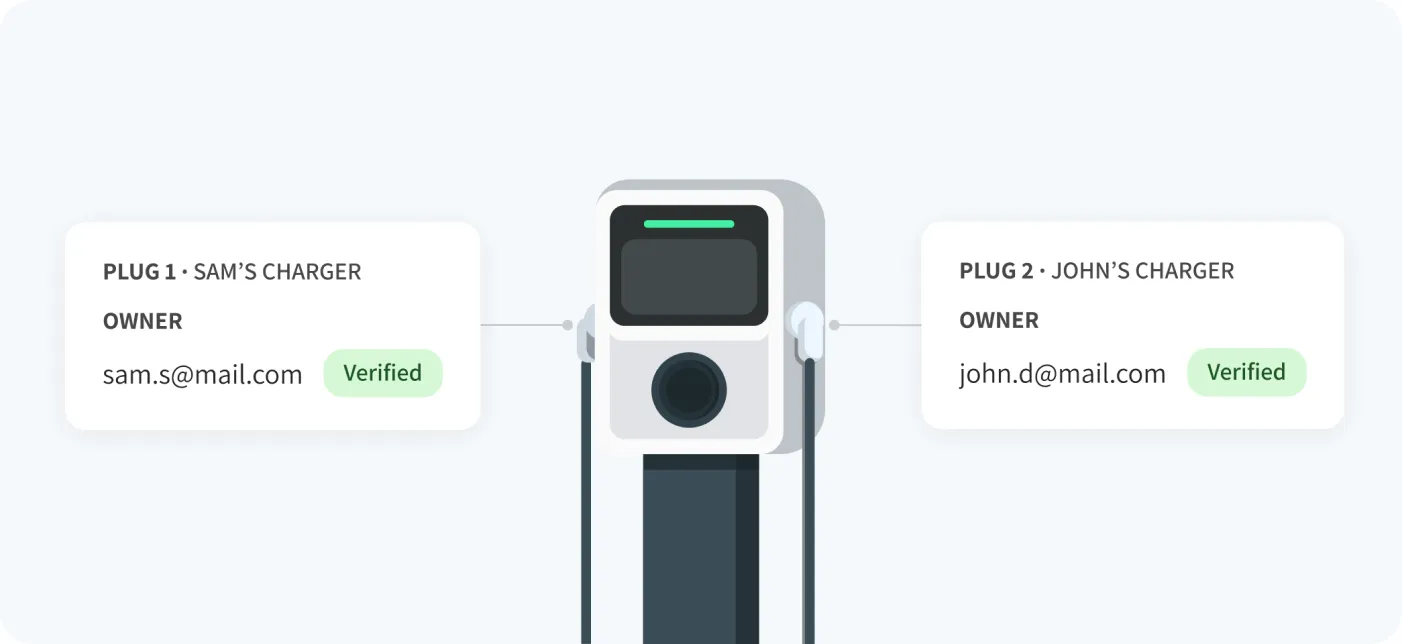
Connect each parking space to the right resident
Assign an owner to each private charging plug and invite them to connect it in the app. Residents can manage their assigned plug, while you maintain visibility across the property.
When someone moves, update the plug owner and invite the next resident without replacing the charger.
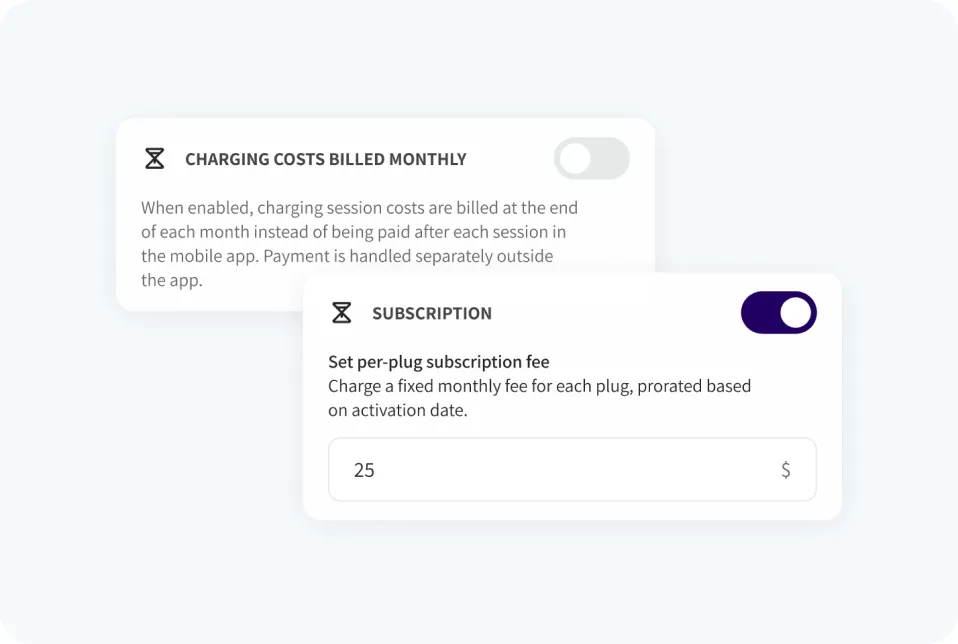
Keep resident billing clear
Combine a plug owner’s charging sessions into one monthly bill, sent under your company name with an itemised statement and payment link.
Add a fixed monthly plug subscription where your service includes a recurring fee, with charging and subscription costs shown on the same bill.
Support residents across every property
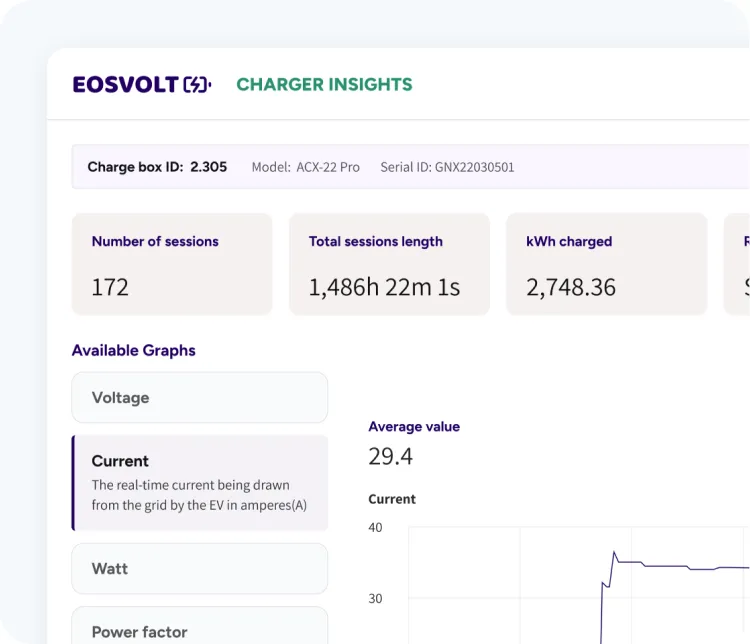
Monitor charger connectivity, status, and charging activity from one dashboard. Review sessions, download charger logs, and use remote tools to investigate issues before arranging a site visit.
Intelligence helps your team understand charger faults and failed sessions through clear explanations and recommended next steps.
Make better use of available charging capacity
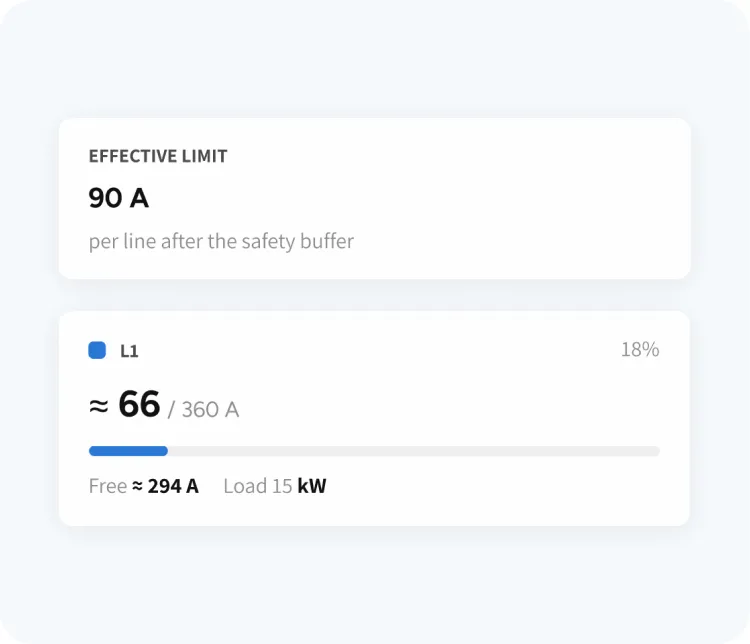
Set power limits for each charging zone and distribute capacity between connected vehicles. Choose dynamic sharing or sequential charging to suit the site, and adjust limits by time and day.
Monitor power use and available capacity from the dashboard to understand how the charging installation is performing.
Offer residential charging with clear oversight.
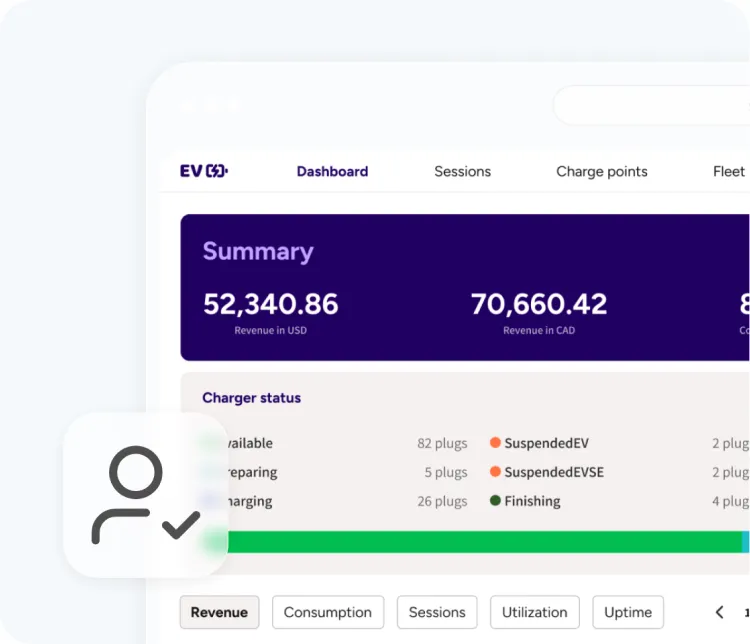
Give housing associations and property managers a charging service that fits their building, with visibility into operations and individual billing for residents.
Keep charging revenue and settlement visible.
Track charging revenue and manage payouts according to your account’s payment model.
For operations using remittances, monthly location statements provide a breakdown of energy, electricity costs, idle fees, and revenue share to support reporting and reconciliation.

Make charging part of
everyday life.
Family sharing
Let plug owners invite family members to use their assigned plug through their own app accounts. Owners can manage shared access without making the plug available to other residents.

Scheduled home charging
Let residents choose charging days and time windows for their assigned plug. Charging starts automatically during the selected hours, with no need to open the app each evening.

Intelligent charging
Where live electricity prices are supported, residents can set when their vehicle needs to be ready. Intelligent Charging uses the available time and electricity prices to charge when it is cheaper.

Charging insights
Give residents a clear view of charging sessions, energy consumption, and costs in the app, so they can understand their usage over time.

Support residents
automatically in the app
Let the AI support assistant handle residents’ questions about charging, payments, bills, and app features.
It uses information from each resident’s account to provide relevant answers in their language, helping your team spend less time on everyday support.
When a resident needs further help, the assistant provides your support contact details.
Frequently asked questions
Can we offer both private and shared charging?
Yes. EOSVOLT supports plugs assigned to individual residents alongside shared charging facilities. Access and pricing can be configured for the different charging arrangements at the property.
What happens when a resident moves out?
The operator updates the owner assigned to the plug and invites the new resident. The charging hardware stays in place.
Can we use chargers already installed at the property?
Existing chargers can be connected where their models are supported by EOSVOLT. Compatibility with load balancing and other functions depends on the charger model and its capabilities.
How are residents billed?
Private plug owners can receive one monthly bill covering their charging sessions. An optional fixed plug subscription can be included on the same bill. Shared chargers use the pricing and payment setup configured for their location.
How is power shared when several vehicles charge at once?
Load balancing distributes the charging capacity configured for the zone. Dynamic balancing shares power between active sessions, while sequential charging supplies vehicles in turn. Limits can also vary by time and day.