

Find charger problems
before they reach the field.
Connect a real charger to Pirx and put its OCPP implementation to the test. Run structured checks, uncover communication problems, and get a scored report showing exactly what needs fixing.

Connect. Test.
Know what to fix.
No complicated setup. Connect your charger, run the tests, and get clear answers about how well its OCPP implementation performs.
Connect your charger
Point your charger’s OCPP connection to Pirx. Once connected, you’re ready to test its behavior.
Run the checks
Test OCPP messages, responses, and charging behavior against structured scenarios designed to expose implementation issues.

Get answers, not just scores
See what passed, what failed, and why. Every finding links back to the evidence your developers need to investigate.
Every message matters.
Every failure explained.
A failed test tells you something is wrong. Pirx helps you understand what went wrong and where to look.
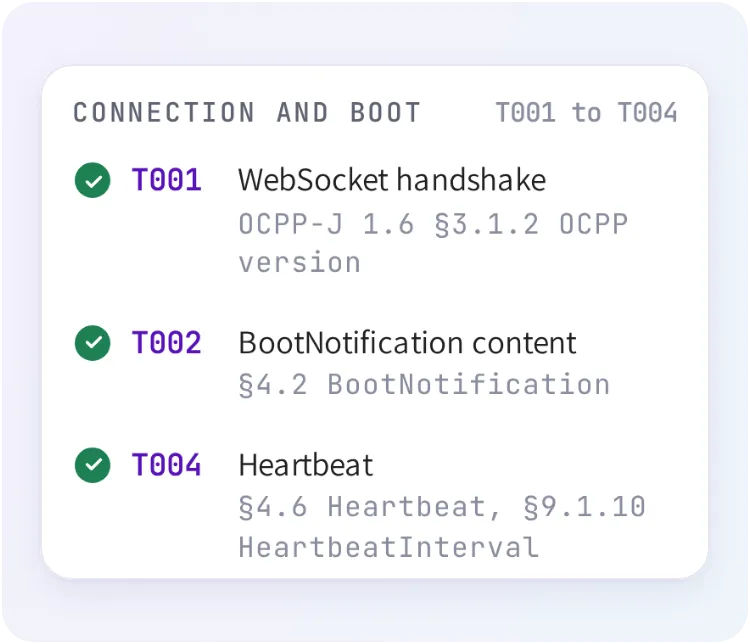
Checked against the specification
Validate OCPP messages and behavior against protocol requirements. See exactly which checks pass and which need attention.
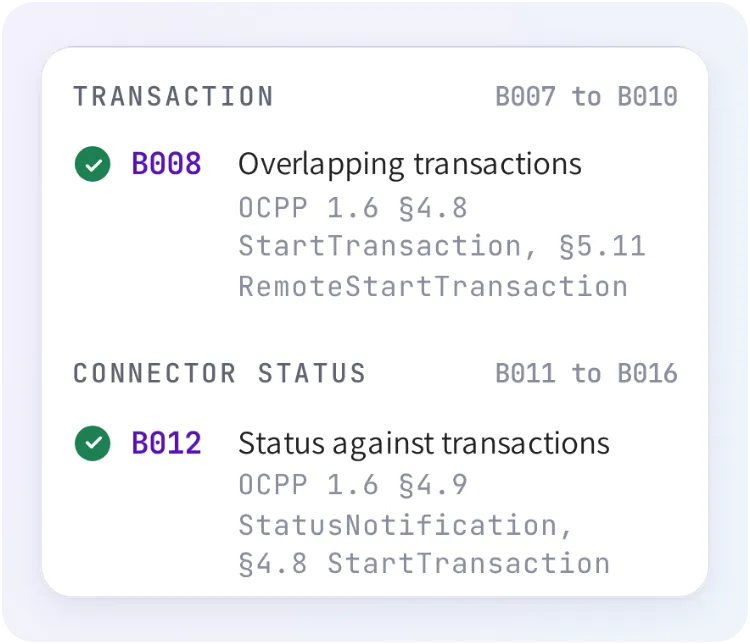
Problems hiding between messages
Some issues only become visible across multiple messages. Pirx examines communication sequences to uncover problems that individual checks might miss.
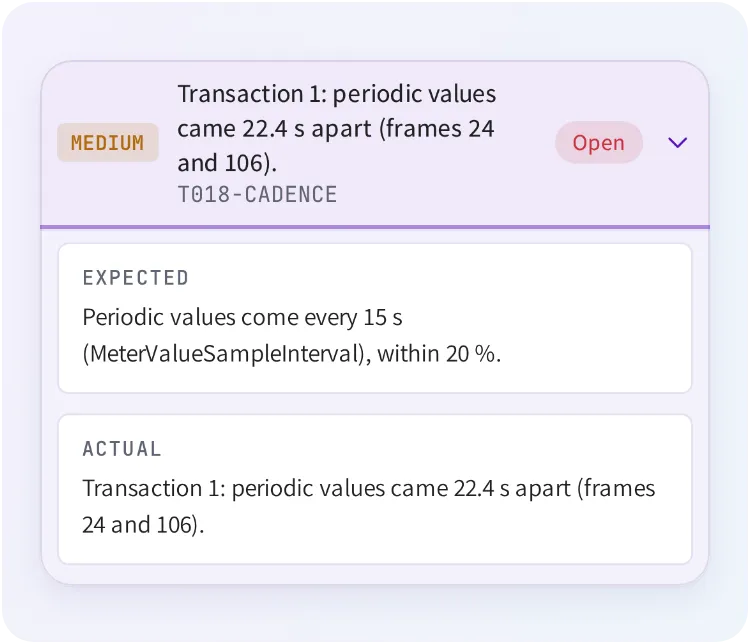
Findings backed by evidence
Every finding comes with the relevant OCPP messages and supporting details. Your developers can go straight from the report to the problem.

Test the moments
that break chargers.
Chargers don’t always behave as expected. Connections drop, transactions fail, and recovery doesn’t always go to plan.
Pirx tests the scenarios that expose weaknesses in charger firmware, helping you find problems in the lab instead of learning about them from customers.

Fix the firmware.
Prove the improvement.
A new firmware release should fix more problems than it creates. Pirx helps you see the difference.
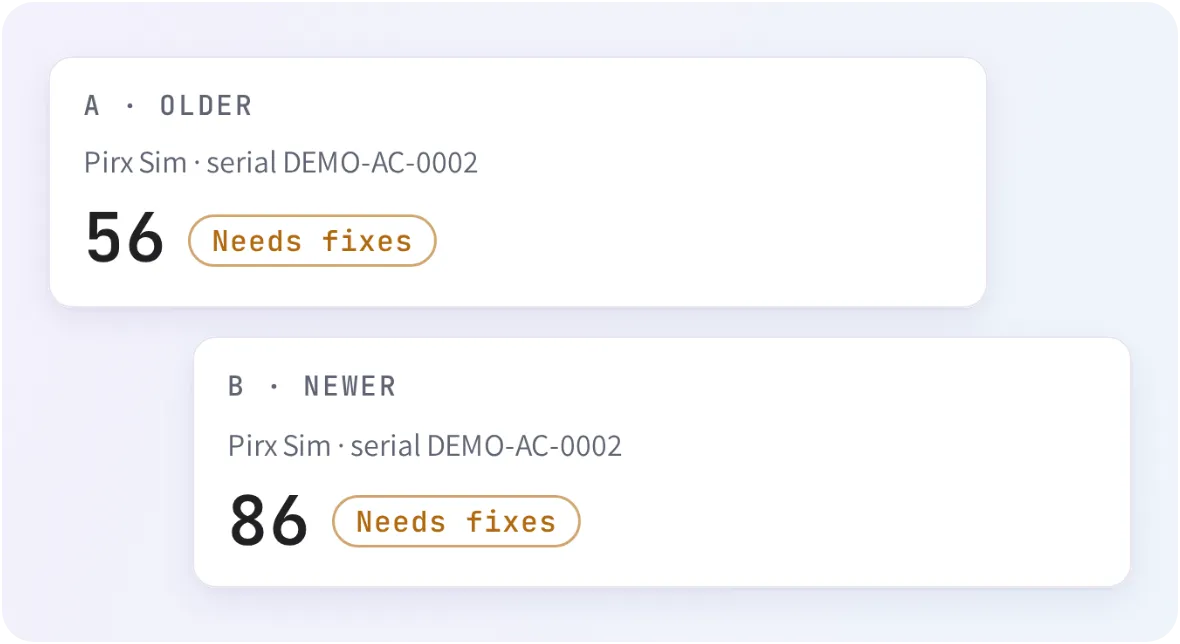
Compare before and after
Run the same tests against different firmware versions. See which problems have been resolved, which remain, and whether new issues have appeared.
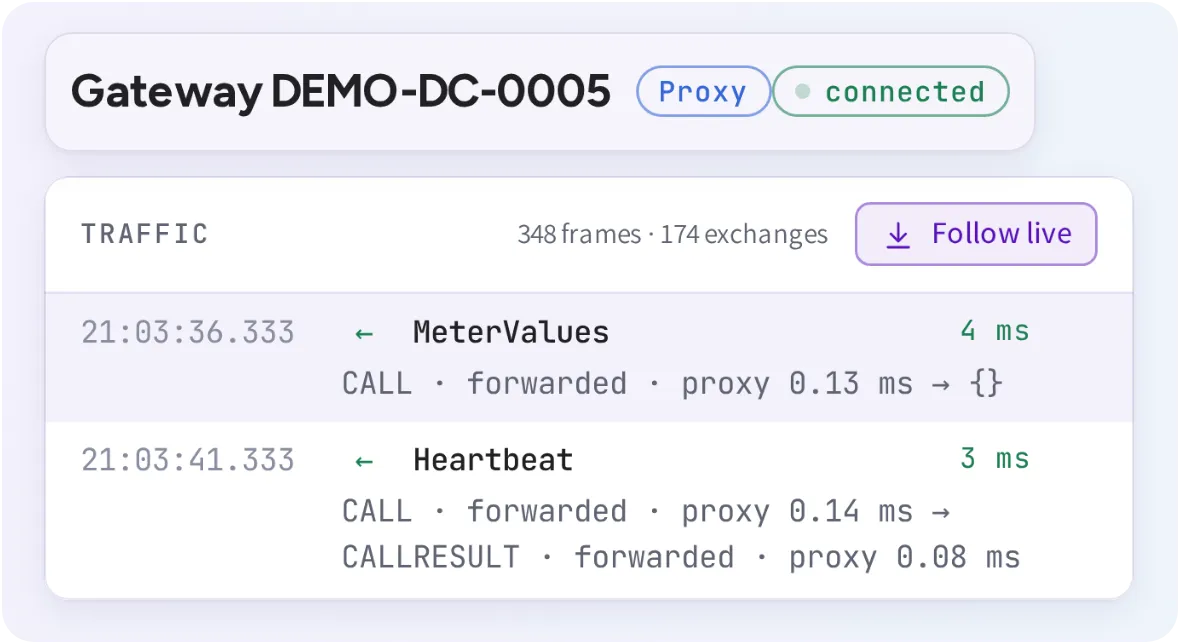
Watch OCPP communication live
Follow the messages exchanged between your charger and its backend. Investigate unexpected behavior, missing responses, and communication problems as they happen.
Frequently asked questions
Is Pirx an official OCPP certification tool?
Pirx is designed for development, testing, and troubleshooting OCPP implementations. It helps you identify issues and prepare for certification, but does not replace official OCPP certification.
Do I need special testing hardware?
You need a charger that can connect to Pirx over OCPP. Tests run through its OCPP connection, without requiring a separate charging management platform.
Can I test different firmware versions?
Yes. Run tests against different firmware releases and compare the results to verify fixes and identify regressions.
Can I see why a test failed?
Yes. Pirx provides detailed findings supported by the relevant OCPP messages, making it easier to identify the cause and reproduce the problem.
Can I monitor live OCPP messages?
Yes. Pirx lets you inspect OCPP communication in real time, so you can investigate how your charger behaves during testing.
Explore
the connected capabilities.
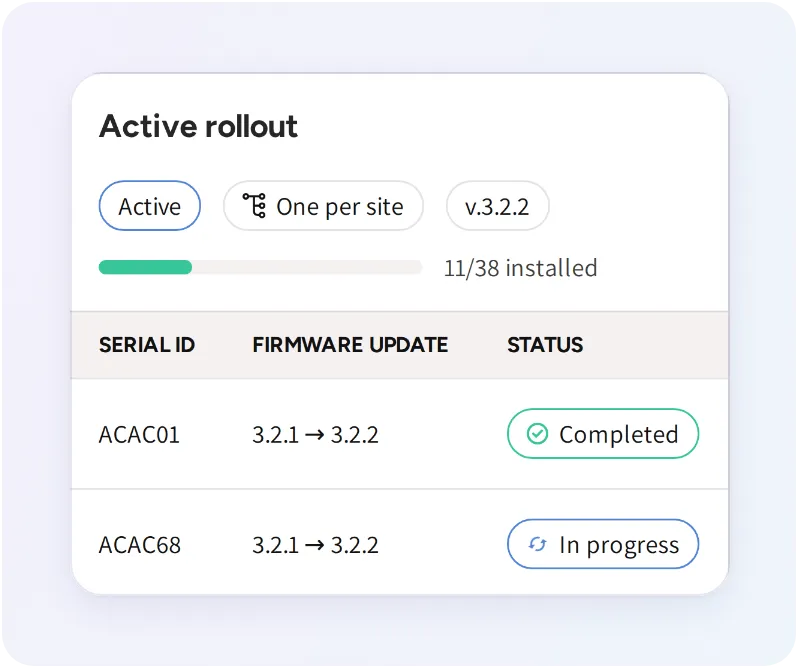
Charger lifecycle management
Test every charger before it ships and keep one view of your installed base. Follow online state, faults and firmware, whichever backend each customer runs.
Supported hardware
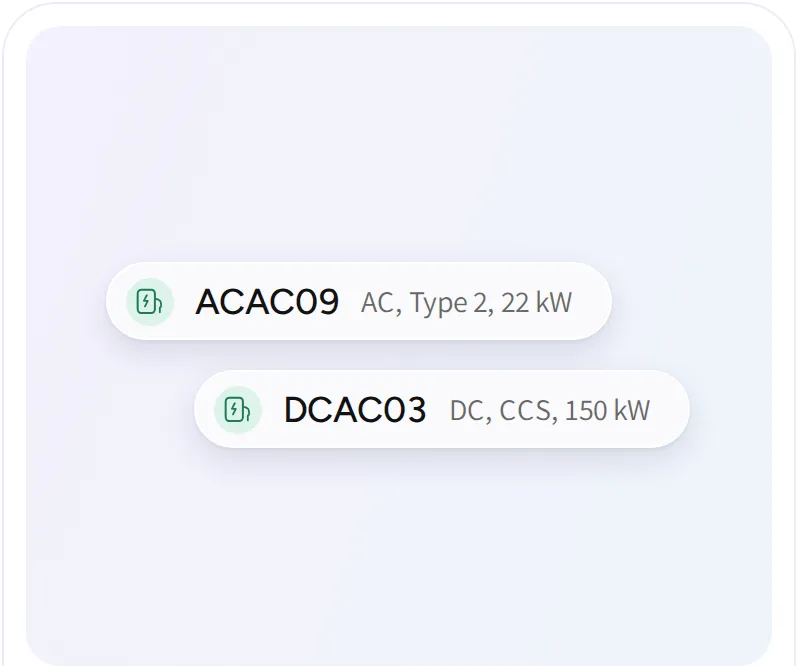
Connect supported AC and DC chargers over OCPP, and manage monitoring, remote commands, and firmware for every model.
Network management
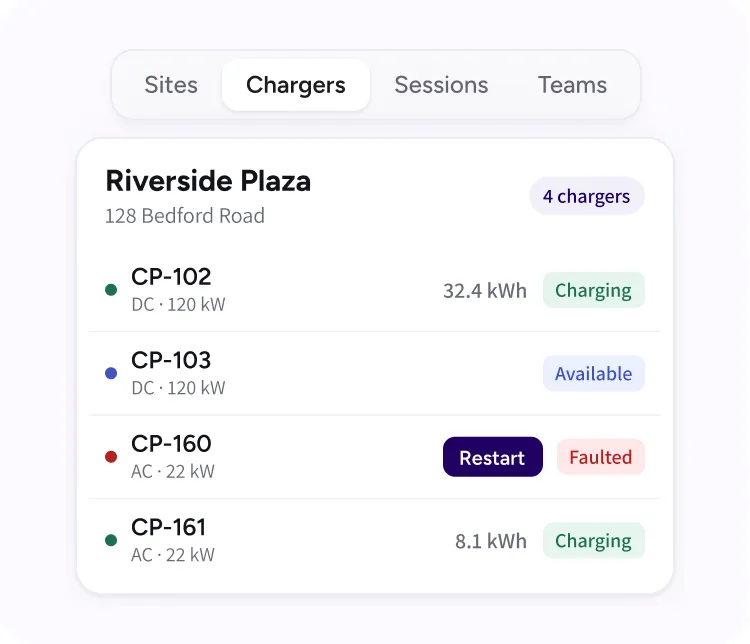
Manage sites, chargers, sessions, customers, and operator teams. Keep the information and controls your team needs together, from the first connection to everyday support.